

Semaglutide peptides
Price range: $110.00 through $270.00
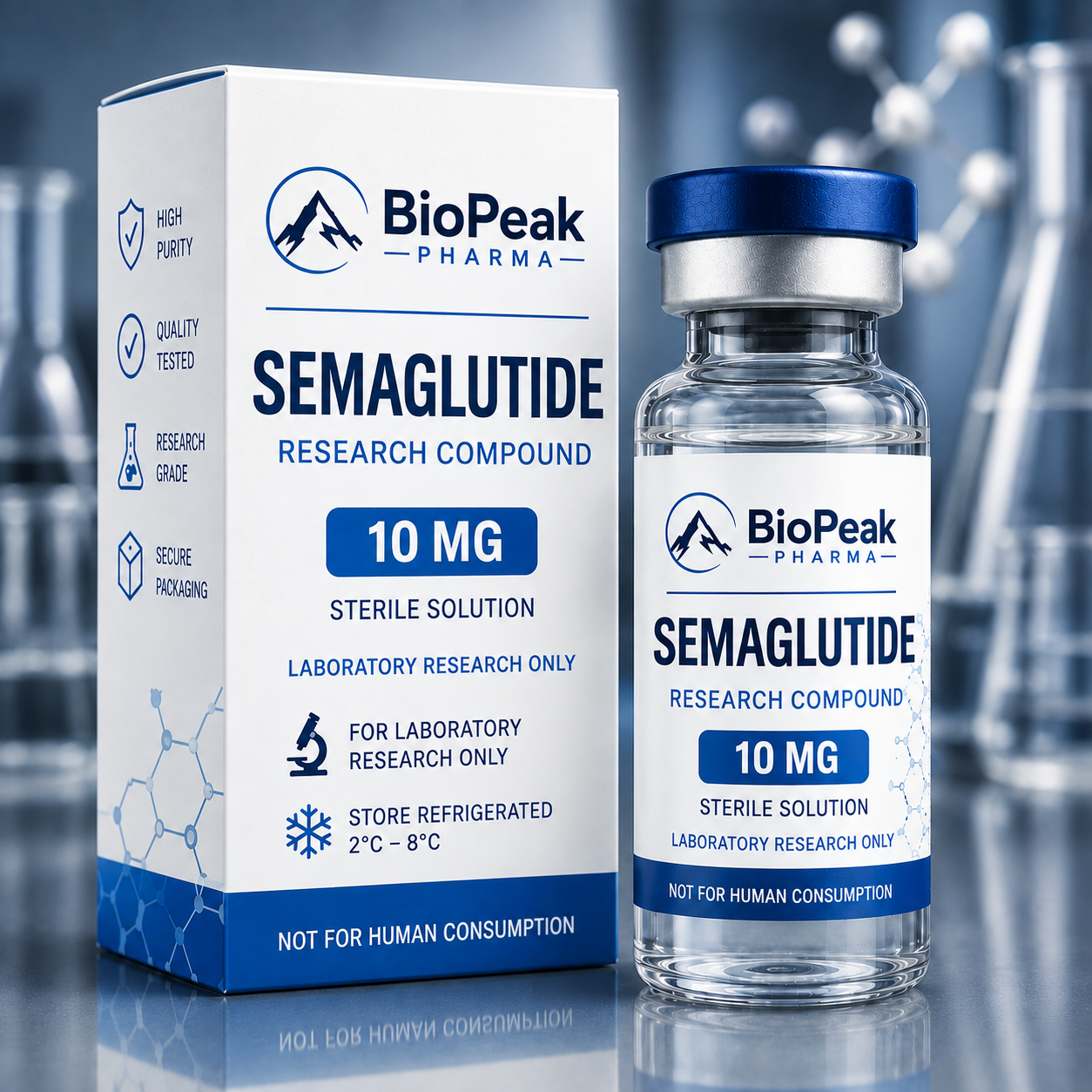
Semaglutide
Semaglutide is a synthetic peptide and GLP-1 receptor agonist that has become an important subject of metabolic, endocrine, and pharmaceutical research. Its activity at the glucagon-like peptide-1 receptor (GLP-1R) makes it relevant to laboratory investigations involving incretin signalling, receptor pharmacology, metabolic pathways, and related areas of biomedical research.
Semaglutide is structurally related to human GLP-1 and has been developed to provide sustained GLP-1 receptor activity. Researchers studying this compound can investigate how GLP-1 signalling interacts with physiological pathways involved in glucose regulation, energy metabolism, and endocrine function.
Our Semaglutide research presentations are supplied in defined quantities for laboratory research. Available quantities should be selected according to legitimate experimental requirements and the applicable research protocol.
Available research quantities: 5mg, 10mg, 15mg, 20mg and other quantities where offered.
What Is Semaglutide?
Semaglutide is a peptide compound that acts on the GLP-1 receptor. GLP-1 is an incretin hormone involved in several biological signalling processes, making the GLP-1 receptor an important area of research in metabolic and endocrine science.
Semaglutide provides researchers with an experimental compound for studying GLP-1 receptor activation and downstream signalling. Its long-acting characteristics have also contributed to substantial scientific interest in its pharmacological properties.
Semaglutide Research Applications
Laboratory research involving semaglutide may examine:
- GLP-1 receptor signalling
- Incretin biology
- Receptor pharmacology
- Metabolic signalling
- Endocrine pathways
- Glucose-regulation mechanisms
- Energy metabolism
- Pharmaceutical research
- Peptide pharmacology
The appropriate application depends on the experimental model, research objectives, laboratory procedures, and applicable regulations.
Semaglutide Research Quantities
Semaglutide 5mg
The 5mg presentation provides a defined quantity of semaglutide for laboratory research involving GLP-1 receptor biology and related signalling pathways.
Semaglutide 10mg
The 10mg presentation provides a larger defined quantity for controlled laboratory investigations where additional research material is required.
Semaglutide 15mg
The 15mg presentation is available as a defined research quantity for appropriate laboratory applications involving semaglutide and GLP-1 receptor signalling.
Semaglutide 20mg
The 20mg presentation provides a larger quantity for laboratory research according to the requirements of the experimental protocol.
Only list quantities that are genuinely available and supported by your product documentation.
How Does Semaglutide Work in Research?
Semaglutide is studied primarily through its interaction with the GLP-1 receptor.
GLP-1 receptor signalling is involved in a range of biological processes, which makes the receptor an important target for research into metabolic and endocrine pathways.
By providing a defined experimental compound, semaglutide can be investigated in appropriate laboratory models to better understand receptor activity, downstream signalling, and related biological mechanisms.
Semaglutide and GLP-1 Research
GLP-1 receptor research is an established area within metabolic and pharmaceutical science.
Researchers investigating GLP-1 pathways may examine receptor binding, receptor activation, signalling responses, pharmacological characteristics, and interactions with other metabolic pathways.
Semaglutide is particularly relevant to this field because of its selective activity at the GLP-1 receptor.
Semaglutide Product Information
Product: Semaglutide
Compound type: Synthetic peptide
Primary research target: GLP-1 receptor
Research areas: Incretin biology, receptor pharmacology, metabolic and endocrine research
Available quantities: 5mg, 10mg, 15mg, 20mg and other quantities where offered
Intended use: Laboratory research only
Human use: Not for human use
Veterinary use: Not for veterinary use
Researchers should consult the current product documentation for batch-specific information, analytical results, identity, purity information, storage requirements, and handling guidance.
Quality and Documentation
Reliable research requires clear product information and appropriate documentation.
Where available, researchers should review:
- Certificate of Analysis (CoA)
- Batch or lot information
- Product identification
- Purity information
- Analytical testing
- Storage guidance
- Handling documentation
Maintaining accurate records can also help researchers compare results across experiments and research batches.
Storage and Handling
Semaglutide should be handled by appropriately trained laboratory personnel using suitable laboratory procedures.
Storage requirements should be determined from the current product-specific documentation. Researchers should verify handling and storage information before beginning experimental work.
Frequently Asked Questions
What is Semaglutide?
Semaglutide is a synthetic peptide that acts as a GLP-1 receptor agonist and is widely studied within metabolic, endocrine, and pharmaceutical research.
What does Semaglutide target?
Semaglutide primarily acts through the glucagon-like peptide-1 receptor, commonly abbreviated as GLP-1R.
Why is Semaglutide studied?
Researchers investigate semaglutide to better understand GLP-1 receptor signalling, incretin biology, metabolic pathways, endocrine mechanisms, and pharmacological activity.
What Semaglutide research quantities are available?
Depending on the product range, research presentations may include 5mg, 10mg, 15mg and 20mg. Only quantities currently available from the supplier should be listed.
Is Semaglutide intended for human use as a research product?
A research-supply presentation should not be marketed for human consumption or self-administration. Research products should be clearly distinguished from approved pharmaceutical products.
How should Semaglutide be stored?
Researchers should follow the current product-specific storage and handling documentation and applicable laboratory procedures.
Research Disclaimer
This page provides general educational information about semaglutide for laboratory research purposes. It is not medical advice and should not be interpreted as treatment or dosing guidance.
Semaglutide research material is not intended for human consumption, self-administration, or veterinary use. Researchers are responsible for following applicable laws, regulations, institutional requirements, and laboratory safety procedures.
Semaglutide Research Peptide
Semaglutide’s selective activity at the GLP-1 receptor makes it a significant compound for research into incretin signalling, receptor pharmacology, metabolic biology, and pharmaceutical science. Clear product identification, appropriate analytical documentation, and responsible laboratory practices are essential when working with investigational research compounds.
| choose an option | 5mg, 10 mg, 15mg |
|---|
Be the first to review “Semaglutide peptides”
Related products
Weight Management Research
Weight Management Research
Weight Management Research

Weight Management Research
Reviews
There are no reviews yet.