
BPC-157
$110.00
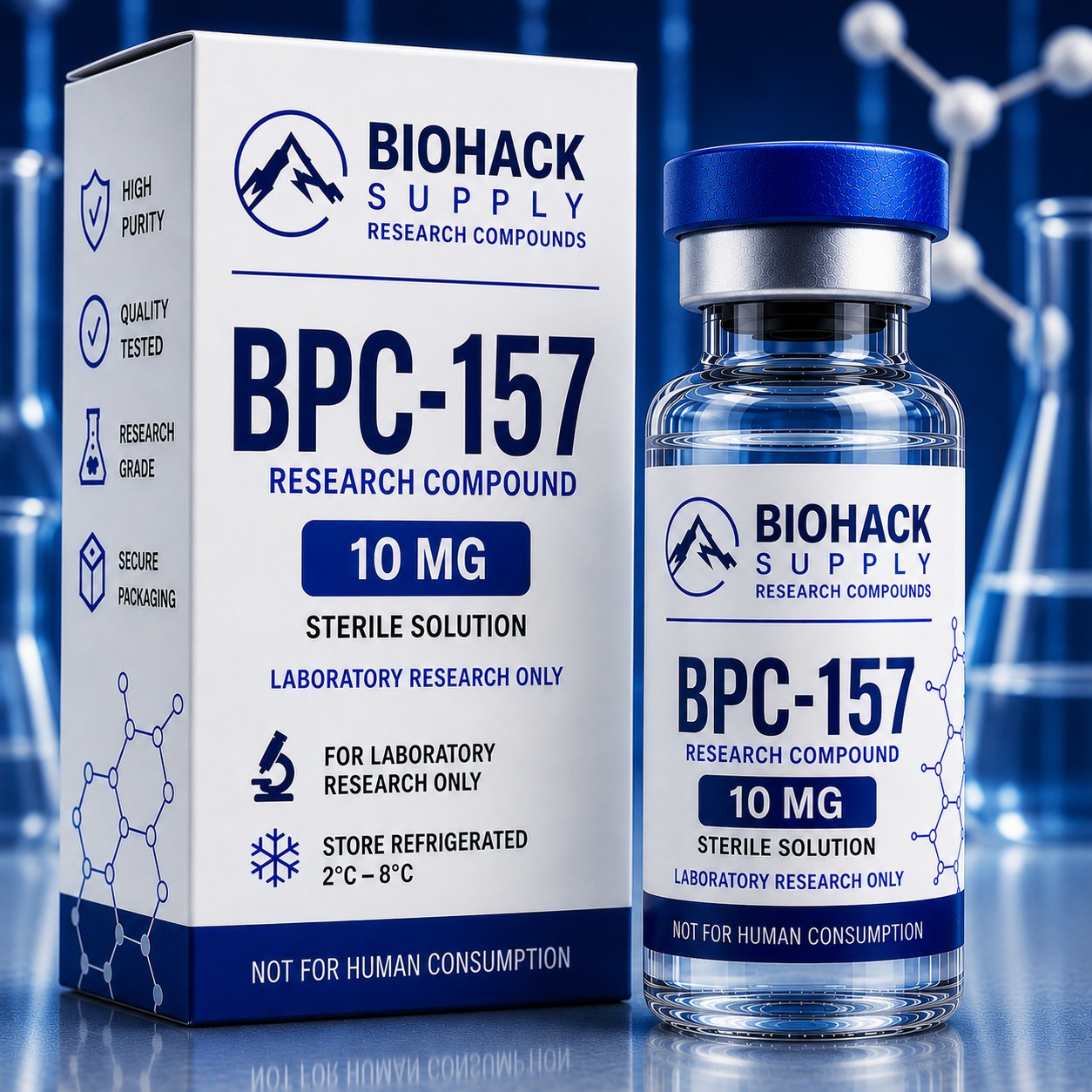
BPC-157
BPC-157 is a synthetic pentadecapeptide that has become a widely studied subject in peptide and cellular research. Also known as Body Protection Compound 157, BPC-157 has been investigated extensively in preclinical research involving tissue biology, cellular signalling, angiogenesis, gastrointestinal biology, musculoskeletal research, and wound-healing mechanisms.
The peptide consists of 15 amino acids with the commonly reported sequence GEPPPGKPADDAGLV. Its unusual stability in experimental gastric environments and broad biological activity have contributed to continued scientific interest.
Research involving BPC-157 has examined several biological pathways, including nitric oxide signalling, angiogenesis, fibroblast activity, endothelial function, and cellular responses associated with tissue repair. Much of the evidence, however, comes from laboratory and animal models. Recent reviews emphasise that human research remains limited, with a need for larger, controlled clinical studies.
BPC-157 is supplied as an investigational research compound for laboratory use only. It should not be represented as an approved medication or marketed for human consumption, self-administration, or veterinary use.
What Is BPC-157?
BPC-157 is a synthetic 15-amino-acid peptide, commonly referred to as Body Protection Compound 157 or gastric pentadecapeptide BPC-157.
Its reported sequence is:
GEPPPGKPADDAGLV
The compound has attracted attention because research has identified activity across several interconnected biological pathways rather than a single narrowly defined target.
Studies have investigated BPC-157 in experimental models involving vascular responses, cellular migration, tissue integrity, inflammatory signalling, gastrointestinal biology, and musculoskeletal tissue.
BPC-157 Research Overview
BPC-157 research covers a surprisingly broad range of biological systems.
Research areas include:
- Tissue biology
- Cellular signalling
- Angiogenesis
- Fibroblast activity
- Endothelial function
- Musculoskeletal research
- Tendon and ligament models
- Muscle research
- Gastrointestinal research
- Wound-healing biology
- Nitric oxide signalling
- Molecular biology
- Peptide pharmacology
A systematic review of the musculoskeletal literature found that most available studies were preclinical, with substantially less human evidence.
BPC-157 and Tissue Research
One of the major areas of interest surrounding BPC-157 is tissue biology.
Preclinical studies have investigated the peptide in models involving tendon, ligament, skeletal muscle, bone, and other tissues. Researchers have explored potential relationships between BPC-157 and processes such as angiogenesis, fibroblast activity, extracellular-matrix formation, and vascular responses.
These findings make BPC-157 an interesting experimental compound for laboratories studying how cellular and vascular mechanisms contribute to tissue responses.
Importantly, positive findings in animal models do not establish equivalent effects in humans.
BPC-157 and Angiogenesis Research
Angiogenesis is the formation of new blood vessels from existing vascular structures.
BPC-157 research has investigated pathways associated with vascular signalling and angiogenesis, including mechanisms involving VEGFR2 and the Akt-eNOS pathway.
This area is particularly relevant because blood-vessel formation and endothelial function are fundamental to many biological processes.
Researchers can therefore investigate BPC-157 within controlled experimental systems designed to examine vascular signalling and cellular responses.
BPC-157 and Fibroblast Research
Fibroblasts are connective-tissue cells involved in producing components of the extracellular matrix.
Experimental research has investigated BPC-157 in relation to fibroblast activity and extracellular-matrix processes. These studies have contributed to interest in the peptide within tissue and musculoskeletal research.
Further research is needed to determine how findings from experimental models translate to human biology.
BPC-157 and Musculoskeletal Research
BPC-157 has received particular attention in research involving tendons, ligaments, muscles, and related connective tissues.
A recent systematic review identified 36 relevant studies through 2024, of which 35 were preclinical and only one was clinical. The review concluded that the existing literature is promising but that human clinical safety and efficacy data remain insufficient.
This distinction is important for accurately describing BPC-157 online: the compound has substantial preclinical research interest, but that is not the same as established clinical evidence.
BPC-157 and Gastrointestinal Research
BPC-157 was originally studied in connection with gastric biology, which remains an important area of the literature.
Research has examined the peptide in experimental models involving gastrointestinal injury, mucosal biology, and inflammatory processes. Earlier literature described BPC-157 as a stable gastric pentadecapeptide and investigated its relationship with gastrointestinal protection.
Current regulatory assessments, however, emphasise that there is insufficient clinical safety information to establish the safety profile of BPC-157 for proposed human routes of administration.
BPC-157 and Nitric Oxide Research
Nitric oxide signalling is another area frequently discussed in BPC-157 research.
Experimental studies have investigated relationships between BPC-157 and nitric oxide pathways, endothelial responses, and vascular biology. These mechanisms may help explain some of the biological activity observed in preclinical models.
Researchers studying BPC-157 can therefore examine the compound within broader investigations of nitric oxide signalling and vascular regulation.
BPC-157 and Cellular Signalling
BPC-157 has been investigated in relation to several cellular signalling pathways.
Recent reviews describe research involving:
- VEGFR2
- Akt-eNOS signalling
- ERK1/2
- Nitric oxide pathways
- Fibroblast activity
- Endothelial responses
These pathways are interconnected with cellular migration, vascular biology, and tissue responses.
Because BPC-157 appears to interact with multiple biological processes, researchers continue to investigate its precise molecular mechanism.
BPC-157 Sequence
The commonly reported BPC-157 sequence is:
GEPPPGKPADDAGLV
BPC-157 is classified as a pentadecapeptide, meaning that it contains 15 amino acids.
The peptide’s molecular identity and purity should always be confirmed through appropriate analytical documentation rather than relying solely on a product name.
BPC-157 Product Information
Product: BPC-157
Full name: Body Protection Compound 157
Alternative description: Gastric pentadecapeptide BPC-157
Compound type: Synthetic pentadecapeptide
Length: 15 amino acids
Common sequence: GEPPPGKPADDAGLV
Research areas: Tissue biology, cellular signalling, angiogenesis, gastrointestinal and musculoskeletal research
Intended use: Laboratory research only
Human use: Not for human use
Veterinary use: Not for veterinary use
Researchers should review current product documentation for identity, purity, analytical testing, batch information, storage requirements, and handling procedures.
Quality and Analytical Documentation
BPC-157 is a peptide for which accurate characterisation is particularly important.
The FDA has raised concerns regarding the physicochemical characterisation of BPC-157-related substances, peptide impurities, aggregation, and potential immunogenicity.
Where available, researchers should review:
- Certificate of Analysis (CoA)
- Batch or lot number
- Peptide identity
- Sequence information
- Purity data
- Analytical testing
- Molecular-weight information
- Storage documentation
- Handling information
Clear batch documentation helps researchers establish exactly which material was used in an experiment.
BPC-157 and Human Research
Human research involving BPC-157 remains considerably smaller than the preclinical literature.
A recent review identified only a small number of pilot human studies and concluded that rigorous, large-scale clinical trials are still needed.
A separate recent review likewise concluded that BPC-157 remains investigational, with major gaps in pharmaceutical characterisation, validated pharmacokinetics, formulation science, and clinical development.
Consequently, product pages should avoid presenting BPC-157 as a proven treatment for injuries, inflammation, gastrointestinal disease, or other medical conditions.
Frequently Asked Questions
What is BPC-157?
BPC-157 is a synthetic 15-amino-acid peptide studied extensively in preclinical research involving tissue biology, cellular signalling, angiogenesis, gastrointestinal biology, and musculoskeletal research.
What does BPC-157 stand for?
BPC-157 is commonly expanded as Body Protection Compound 157.
What is the BPC-157 sequence?
The commonly reported sequence is GEPPPGKPADDAGLV.
Is BPC-157 a peptide?
Yes. BPC-157 is a synthetic pentadecapeptide, meaning it contains 15 amino acids.
Why is BPC-157 researched?
Researchers investigate BPC-157 in areas including cellular signalling, angiogenesis, tissue biology, gastrointestinal research, tendon and ligament models, muscle research, and wound-healing biology.
Does BPC-157 have human clinical evidence?
Human evidence remains limited compared with the much larger body of preclinical research. Recent reviews emphasise the need for larger, controlled clinical studies.
Is BPC-157 FDA approved?
BPC-157 should not be represented as an FDA-approved medication. The FDA has identified limited safety information and concerns involving characterisation, impurities, aggregation, and potential immunogenicity.
Is BPC-157 a regenerative medicine?
BPC-157 is investigated in regenerative-biology and tissue-research models, but calling it an established regenerative treatment would overstate the current human evidence.
Is BPC-157 the same as TB-500?
No. BPC-157 and TB-500 are different investigational peptide compounds with different sequences and research backgrounds.
Is BPC-157 a growth hormone peptide?
No. BPC-157 is not a growth-hormone secretagogue. Its research is primarily associated with cellular, vascular, gastrointestinal, and tissue-related pathways.
How should BPC-157 research material be handled?
BPC-157 should be handled by appropriately trained laboratory personnel according to product-specific documentation, institutional procedures, and applicable laboratory safety requirements.
Research Disclaimer
This page provides educational information about BPC-157 for legitimate laboratory research purposes. It does not constitute medical advice, treatment guidance, or a recommendation for human use.
BPC-157 research material is not intended for human consumption, self-administration, or veterinary use. Researchers are responsible for complying with applicable laws, regulations, institutional requirements, and laboratory safety procedures.
BPC-157 Research Peptide
BPC-157 remains one of the most extensively discussed investigational peptides in contemporary preclinical research. Its research profile spans tissue biology, angiogenesis, cellular signalling, gastrointestinal research, musculoskeletal models, and molecular biology.
The scientific literature is promising in several experimental areas, but the gap between preclinical findings and established human evidence remains important. For researchers, accurate molecular identification, reliable analytical documentation, appropriate handling, and careful interpretation of the available evidence are essential.
BPC-157 should therefore be understood as an investigational research peptide, not as an established medical treatment.
Be the first to review “BPC-157”
Related products

Recovery & Tissue Research
Recovery & Tissue Research
Recovery & Tissue Research
Recovery & Tissue Research
Reviews
There are no reviews yet.