
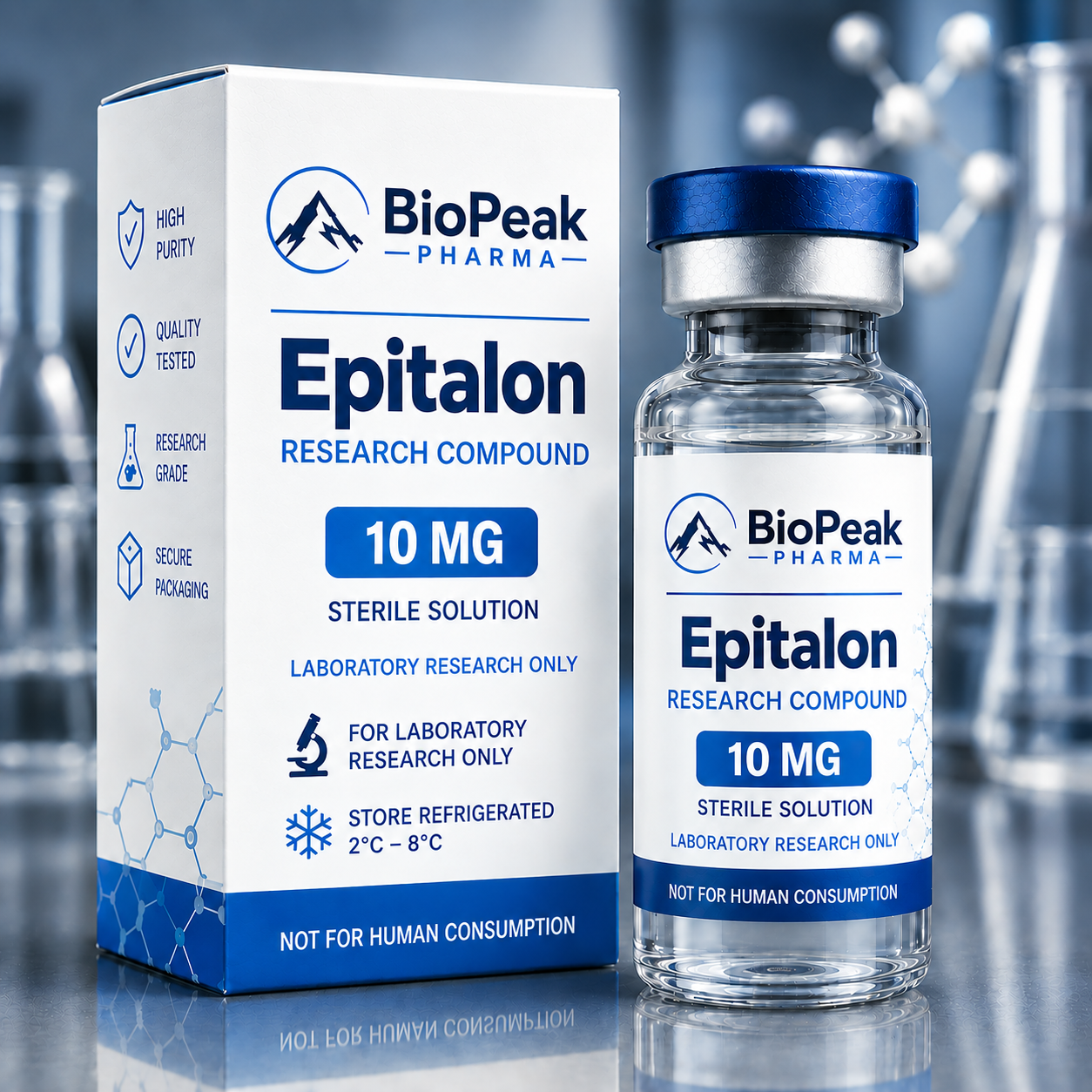
Buy Epitalon 5mg
$110.00
Epitalon
Epitalon is a synthetic tetrapeptide that has attracted interest in laboratory research focused on cellular biology, ageing-related pathways, gene expression, and biological signalling. It is commonly described in research literature as a peptide composed of four amino acids: Ala-Glu-Asp-Gly (AEDG).
Research interest in Epitalon has developed around its potential interactions with cellular processes associated with ageing and longevity. Researchers investigating this compound may explore areas including cellular signalling, oxidative stress, gene expression, telomere-related biology, and age-associated molecular mechanisms.
Epitalon is supplied as a research compound for laboratory research purposes only. It is not intended for human consumption, self-administration, or veterinary use.
What Is Epitalon?
Epitalon, also known as Epithalon in some scientific and commercial literature, is a synthetic tetrapeptide consisting of four amino acids: alanine, glutamic acid, aspartic acid, and glycine.
Its small molecular structure has made it a subject of experimental peptide research, particularly within studies examining cellular ageing and biological mechanisms associated with longevity.
Researchers may investigate Epitalon within controlled laboratory models to better understand cellular responses and signalling pathways.
Epitalon Research Applications
Research involving Epitalon may focus on:
- Cellular ageing research
- Longevity-related research
- Gene expression
- Cellular signalling
- Oxidative stress research
- Telomere-related biology
- Peptide pharmacology
- Molecular biology
- Age-associated cellular mechanisms
The appropriate research application depends on the experimental model, research objectives, laboratory procedures, and applicable regulations.
Why Is Epitalon Studied?
Epitalon has generated interest because of its association with research into biological ageing and cellular regulation.
Researchers investigating ageing biology examine numerous molecular processes that can change over time, including gene expression, oxidative balance, cellular signalling, and telomere-associated mechanisms.
Epitalon provides an experimental peptide model that can be investigated within these areas, helping researchers examine how specific peptide structures may interact with cellular processes.
Epitalon and Longevity Research
Longevity research encompasses a broad range of scientific disciplines focused on understanding the molecular and cellular mechanisms associated with ageing.
Epitalon is one of several peptides that have been investigated within this broader field. Research may examine its relationship with cellular signalling, gene expression, oxidative processes, and other mechanisms relevant to ageing biology.
It is important to distinguish research interest from established clinical evidence. Laboratory investigation does not by itself establish a compound as an effective treatment or longevity intervention.
Epitalon Product Information
Product: Epitalon
Alternative name: Epithalon
Compound type: Synthetic tetrapeptide
Sequence: Ala-Glu-Asp-Gly (AEDG)
Research areas: Cellular biology, ageing research, molecular signalling and longevity research
Intended use: Laboratory research only
Human use: Not for human use
Veterinary use: Not for veterinary use
Researchers should review the current product documentation for available information concerning identity, analytical testing, purity, batch details, storage requirements, and handling procedures.
Quality and Documentation
Reliable laboratory research depends on clear product identification and appropriate documentation.
Where available, researchers should review:
- Certificate of Analysis (CoA)
- Batch or lot information
- Peptide identification
- Purity information
- Analytical testing
- Storage guidance
- Handling information
Maintaining accurate batch records can also help laboratories compare results across experiments.
Storage and Handling
Epitalon should be handled by appropriately trained laboratory personnel using suitable laboratory procedures.
Storage conditions should follow the current product-specific documentation supplied with the research material. Researchers should verify the applicable storage and handling requirements before beginning experimental work.
Frequently Asked Questions
What is Epitalon?
Epitalon is a synthetic tetrapeptide composed of alanine, glutamic acid, aspartic acid, and glycine. It has been investigated in laboratory research involving cellular ageing, molecular biology, and longevity-related pathways.
What is the sequence of Epitalon?
The commonly reported peptide sequence is Ala-Glu-Asp-Gly (AEDG).
Is Epitalon the same as Epithalon?
Epitalon and Epithalon are names used to refer to the same tetrapeptide in different research and commercial contexts.
Why is Epitalon researched?
Researchers have investigated Epitalon in connection with cellular ageing, gene expression, oxidative stress, signalling pathways, and other mechanisms associated with ageing biology.
Is Epitalon approved as an anti-ageing treatment?
Research interest should not be confused with established clinical efficacy. Epitalon should not be marketed as an approved anti-ageing treatment or represented as a cure or therapy.
Is Epitalon intended for human use?
Research-grade Epitalon is intended for legitimate laboratory research and should not be marketed for human consumption or self-administration.
Research Disclaimer
This information is provided for educational and legitimate laboratory research purposes. It does not constitute medical advice, treatment guidance, or a recommendation for human use.
Epitalon research material is not intended for human consumption, self-administration, or veterinary use. Researchers are responsible for following applicable laws, regulations, institutional requirements, and laboratory safety procedures.
Epitalon Research Peptide
Epitalon remains an interesting subject within peptide and ageing research because of its small tetrapeptide structure and its association with investigations into cellular ageing and molecular biology. Clear product identification, appropriate analytical documentation, and responsible laboratory practices are essential when working with investigational research compounds.
Be the first to review “Buy Epitalon 5mg”
Related products
Anti-Aging & Longevity

Anti-Aging & Longevity
Anti-Aging & Longevity
Anti-Aging & Longevity
Anti-Aging & Longevity
Anti-Aging & Longevity
Reviews
There are no reviews yet.