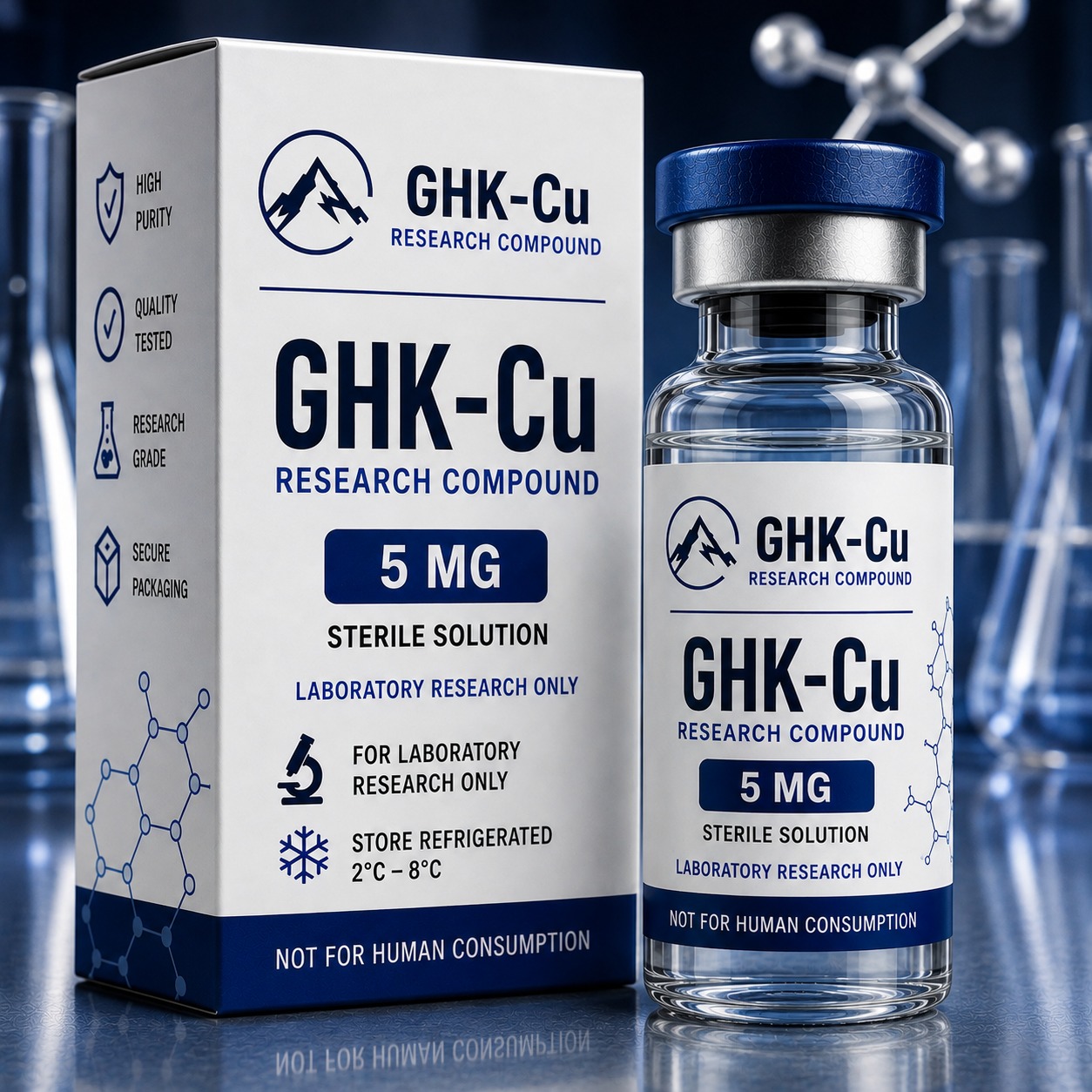
Discover GHK-Cu 50mg
$250.00
GHK-Cu
GHK-Cu, also known as copper tripeptide-1, is a naturally occurring copper-binding peptide that has become a significant subject of research in skin biology, cellular signalling, tissue research, and peptide science.
The peptide consists of the tripeptide glycine-histidine-lysine (GHK) associated with copper ions. Its distinctive copper-binding properties have contributed to continued scientific interest in how GHK-Cu interacts with biological systems and cellular processes.
Research involving GHK-Cu spans several areas, including extracellular matrix biology, cellular signalling, skin-related research, oxidative processes, and tissue biology.
GHK-Cu research material is supplied for laboratory research purposes only and is not intended for human consumption, self-administration, or veterinary use.
What Is GHK-Cu?
GHK-Cu is a copper-binding peptide composed of glycine, histidine, and lysine. The abbreviation GHK refers to these three amino acids, while Cu refers to the copper associated with the peptide complex.
GHK-Cu occurs naturally in the human body and has been studied extensively within biochemical and dermatological research.
Its ability to interact with copper has made GHK-Cu particularly interesting to researchers examining cellular and extracellular processes.
GHK-Cu Research Applications
Laboratory research involving GHK-Cu may investigate:
- Peptide and copper biology
- Cellular signalling
- Extracellular matrix research
- Skin biology
- Collagen-related research
- Tissue research
- Oxidative stress pathways
- Molecular biology
- Cellular repair mechanisms
- Peptide pharmacology
The appropriate application depends on the research model, experimental objectives, laboratory procedures, and applicable regulations.
Why Is GHK-Cu Studied?
GHK-Cu has attracted scientific interest because of its relationship with copper-dependent biological processes and its presence in human physiology.
Researchers investigating GHK-Cu may examine how peptide-copper interactions influence cellular signalling and extracellular matrix processes. The compound has also been studied in relation to biological mechanisms involving collagen, tissue structure, and cellular responses.
These areas make GHK-Cu relevant to research spanning molecular biology, skin science, tissue biology, and peptide research.
GHK-Cu and Skin Research
GHK-Cu is particularly well known within skin and cosmetic research.
Researchers may investigate its relationship with extracellular matrix components and cellular processes involved in maintaining tissue structure.
Studies involving GHK-Cu can examine cellular responses, matrix-related pathways, and molecular mechanisms relevant to skin biology.
Research findings should be interpreted carefully, and laboratory evidence should not automatically be presented as proof of a clinical or cosmetic benefit.
GHK-Cu and Copper-Binding Research
One of the defining characteristics of GHK-Cu is its interaction with copper.
Copper is an important trace element involved in numerous biological processes. Studying copper-binding peptides such as GHK-Cu allows researchers to investigate the relationship between peptide structure, metal binding, and biological activity.
This makes GHK-Cu useful as a research model within peptide chemistry and biochemical studies.
GHK-Cu Product Information
Product: GHK-Cu
Alternative name: Copper Tripeptide-1
Peptide sequence: Gly-His-Lys (GHK)
Compound type: Copper-binding tripeptide
Research areas: Skin biology, cellular signalling, extracellular matrix and molecular research
Intended use: Laboratory research only
Human use: Not for human use
Veterinary use: Not for veterinary use
Researchers should consult the current product documentation for information concerning identity, purity, analytical testing, batch details, storage requirements, and handling procedures.
Quality and Documentation
Reliable research requires accurate product identification and appropriate analytical documentation.
Where available, researchers should review:
- Certificate of Analysis (CoA)
- Batch or lot information
- Peptide identification
- Purity information
- Analytical testing
- Copper-complex information
- Storage guidance
- Handling information
Maintaining accurate research records can help laboratories evaluate consistency between different experiments and batches.
Storage and Handling
GHK-Cu should be handled by appropriately trained laboratory personnel using suitable laboratory procedures.
Storage conditions should follow the current product-specific documentation. Researchers should verify the applicable storage and handling requirements before beginning experimental work.
Frequently Asked Questions
What is GHK-Cu?
GHK-Cu is a copper-binding tripeptide consisting of glycine, histidine, and lysine associated with copper. It is widely studied in peptide, cellular, skin, and molecular research.
What does GHK-Cu stand for?
GHK-Cu refers to the glycine-histidine-lysine peptide associated with copper. It is also commonly known as copper tripeptide-1.
What is the sequence of GHK-Cu?
The underlying tripeptide sequence is Gly-His-Lys (GHK).
Why is GHK-Cu researched?
Researchers investigate GHK-Cu in areas including cellular signalling, extracellular matrix biology, skin research, copper-binding biology, tissue research, and molecular biology.
Is GHK-Cu a copper peptide?
Yes. GHK-Cu is commonly classified as a copper-binding peptide or copper peptide because the GHK tripeptide is associated with copper.
Is GHK-Cu intended for human use?
Research-grade GHK-Cu should be supplied and represented for legitimate laboratory research purposes and should not be marketed for human consumption or self-administration.
Research Disclaimer
This information is provided for educational and legitimate laboratory research purposes. It does not constitute medical advice, treatment guidance, or a recommendation for human use.
GHK-Cu research material is not intended for human consumption, self-administration, or veterinary use. Researchers are responsible for following applicable laws, regulations, institutional requirements, and laboratory safety procedures.
GHK-Cu Research Peptide
GHK-Cu is a distinctive copper-binding peptide with broad research interest across peptide chemistry, cellular signalling, skin biology, extracellular matrix research, and molecular science. Its well-characterised GHK structure and association with copper make it a useful subject for controlled laboratory investigation.
For research laboratories, accurate product identification, appropriate analytical documentation, and responsible handling remain essential when evaluating GHK-Cu and other investigational peptide compounds.
Be the first to review “Discover GHK-Cu 50mg”
Related products
Anti-Aging & Longevity
Anti-Aging & Longevity
Anti-Aging & Longevity

Anti-Aging & Longevity
Anti-Aging & Longevity

Anti-Aging & Longevity
Reviews
There are no reviews yet.